Dying Well
5 Tips for Creating a Personal Sendoff

Today’s guest post is from Elizabeth Meyer. Elizabeth is an expert in planning
personalized funeral services, and hopes to make funeral planning a less taboo,
more approachable subject. After planning a unique funeral for her own father
in 2006, she joined Frank E. Campbell funeral home in New York City as Family
Services Liaison, where she served Campbell’s and Riverside Memorial Chapel
helping families create exceptional services. She earned an MBA from Cass
Business School in London and a BA from New York University. She is currently
the Funeral Guru at Everplans.com.
When I tell people that I work in the funeral industry, most
become speechless. Looking at me questioningly, they’ll mange to ask,
“But…why?” I tell them about the funeral I planned for my father six years ago.
It was the most emotionally challenging thing I’ve ever done, but it was also
the most rewarding. I understand the power that a meaningful funeral or
memorial service has in the emotional processing, grieving, and healing after a
death. And so I use what I learned from my own experience to guide and empower
others to create meaningful sendoffs for their loved ones. I deeply understand
the power that a meaningful funeral or memorial service has in the emotional
processing, grieving, and healing after a death. I hope that by helping people create
personalized services I am alleviating some pain for these families.
Obviously, I can’t tell you what specifically will be
meaningful to you or loved ones. I can, however, share the lessons I learned
from planning my dad’s funeral and the dozens of special funeral and memorial
services I’ve helped other families plan. So without further ado, here are my
top 5 things to consider when creating a personalized sendoff:
1. Religion

Religion is an important factor in funeral plans, and
religious rites and traditions can dictate everything from whether the body
should be buried or cremated, to where and when the service should be held, to
what foods should be eaten afterward. If you’ll be following any religious
rituals, get a sense of the traditions before you make any solid plans; the
specific rituals you’ll follow may override any other desires you might have.
For example, you might want an ornate casket for your loved
one and a lot of flowers at the service. But if you’ll be following Jewish
customs, you’ll want to purchase a plain pine casket and forgo flowers, which
are not traditional. Or, if you’ll be following Catholic customs, you’ll want
to have people deliver eulogies and other speeches at a wake before the funeral
service, since the service will be a Mass.
My father was raised Jewish, but was much more frequently
found in church with my Catholic mother than in synagogue. While this meant
that we were not constrained byto any religious norms at his funeral, it also
meant that we were left custom-less, working with a blank canvas. If you’re
like us, then the next four issues can be really important, since you’ll
basically be traveling without a map.
2. Venue

When my father died, hundreds of friends wanted to support
us; we needed a venue that could accommodate everyone. It was most practical to
hold the funeral in the large non-denominational chapel at the funeral home.
But we had other options, too: we could have held the funeral in a large church
or synagogue, at an event space, or even a restaurant if we’d wanted.
Some funerals are quite large and others are very intimate;
finding a venue that can cater to the number of guests is what matters most.
(Remember: a funeral isn’t a popularity contest.) If you have a large number of
guests, you’ll want to be able to fit everyone in the space. On the other hand,
if there will be only a handful of guests, you’ll want to choose a smaller
venue and create an intimate environment where everyone is comfortable.
So whether you choose a funeral home chapel, a church,
mosque, or even your own living room, consider the number of people who will be
in attendance, and think about where you’d be most comfortable remembering your
loved one.
3. Music
When my father died in the prime of his life, my family and
I were beyond distraught. But I didn’t want my dad’s funeral to be
overwhelmingly morbid. Rather than concentrate on my family’s loss, I focused
on making the event a celebration of my father’s incredible life. And one of
the ways I made sure the funeral was a celebration was through music.
We had jazz playing as the guests entered. I chose songs
that dad always played at home, and I was comforted listening to Miles Davis
and feeling like he was there. At the end of the service, guests were caught
off guard when Jefferson Airplane’s “White Rabbit” come blasting out of the
speakers. By the time the Rolling Stones came on, everyone was dancing in the
aisles as they wiped the tears from their eyes. Dad would have loved this!
Having a pianist or organ would not have been appropriate
for my dad; he just wasn’t that kind of guy. But that doesn’t mean that it
wouldn’t be perfect for your loved one. To figure out the right music for your
situation, ask yourself: What were his or her favorite songs? What songs do you
associate with him or her? What songs do you think he or she would like people
to hear as they say goodbye? By choosing meaningful music you’ll feel like you
are giving them a fitting sendoff—and it’s likely that the songs will elicit
warm memories, too.
4. Speeches, Eulogies, and Readings

At my dad’s funeral, I selected speakers who knew my dad
from different walks of life. My brother and I were the first speakers, and we
shared our heartfelt and entertaining memories of our father. Dad’s cousin
spoke about growing up with my dad; his, business partner spoke about what an
amazing attorney and colleague my dad was; and a couple of friends also spoke
about who he was as a man and a friend. By having all the speakers from
different times and areas of his life, they were able to jointly create the
most beautiful and complete image of my dad.
If possible, I would try to replicate have people deliver
that same variety of speeches on a variety of topics. In addition, No matter how entertaining the
deceased was, repetitive stories are never fun! Also, it can be nice to
consider incorporating readings into the service. These can range from religious passages,
hymns, and to poems from either the reader or the deceased favorite poets.
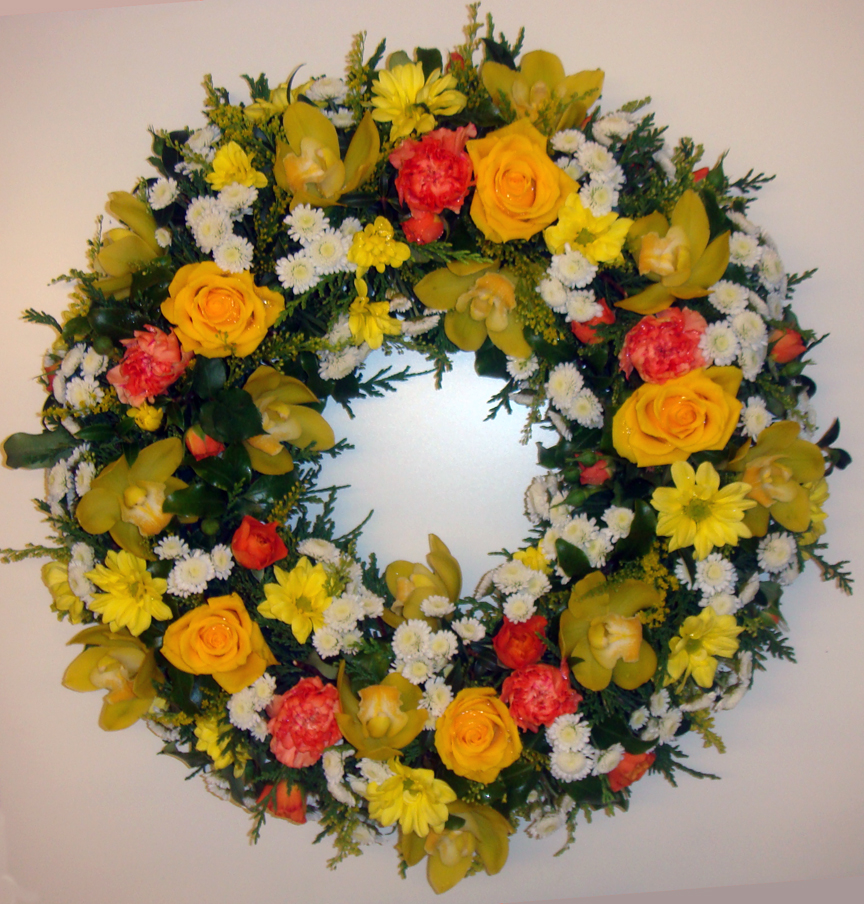
5. Flowers

I knew when I planned my dad’s funeral that flower choice
was crucial. My dad was not particularly passionate about flowers—but flowers
are so important to my mother, and I knew that she would be consoled by seeing
flowers ones flowers that reminded her of dad.
So I opted for peonies, the flowers he always brought home to my mom.
Moreover, I opted to cover dad’s casket in a blanket of
flowers. I knew it would be too difficult for my mom to walk in and see a
casket at the front of the room; this way she was distracted and only saw her
favorite flowers.
Flowers can remind us of the person we loved or distract us
from our pain. Flowers can be in the colors of the person’s favorite sports
team or in the shape of a heart, a cross, or even a golf club. They help set
the mood, and they help make a funeral feel like a celebration.
These are my broad guidelines for creating a meaningful
funeral. But please, get creative! Have a memorial service on a golf course or
in a restaurant. Send ashes into outter space or out to sea. The only solid
advice I can give is to honor the person who died with a fitting sendoff. I know
it made me feel good about the final gift I gave my dad.
Article taken from: